Party Ideas & Guides
What works at each age, from one to twelve
The single most common reason a kids party falls flat is entertainment pitched at the wrong age. This guide goes year by year through what holds attention, how long a party should run, and what to skip.
Children change faster between three and eight than at almost any other point, and party entertainment has to change with them. What delights a four year old insults a nine year old, and what a nine year old loves goes completely over a four year old's head.
One to two years
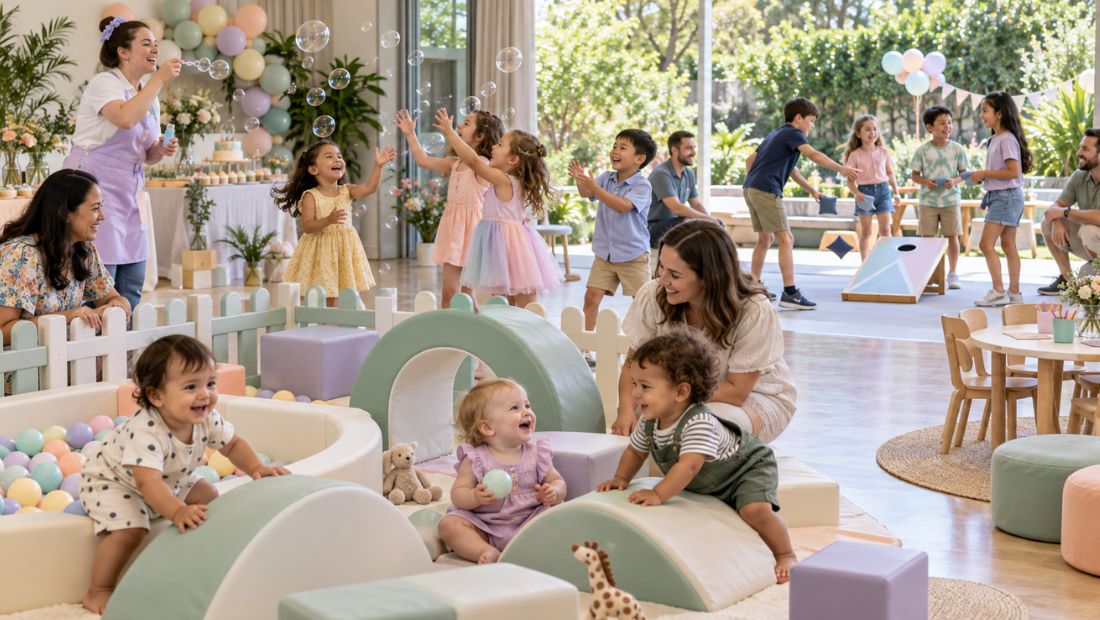
They cannot follow a routine, cannot sit through anything, and will not remember the day. The party is genuinely for the adults, and the job of the entertainment budget is to give the babies somewhere safe to be so the grown ups can talk.
- Book play hire, not a performer. Toddler play, a small soft play set or a ball pit.
- Two hours, late morning, after the first nap.
- Add a face painter only if older cousins and siblings are coming.
- Skip magic shows, character performances and anything requiring them to watch.
Three to five years
This is the hardest age to plan for and the one where an experienced entertainer earns their fee most obviously. They want something to happen but cannot sustain attention on any single thing for more than about ten minutes.
- Short blocks, cycled. Bubbles, parachute, a song, a story, and around again.
- Ninety minutes total is plenty. Two hours starts to sag.
- Face painting, characters and gentle entertainers all land well.
- Keep a play area running underneath the structured activity.
- Skip long performances and anything competitive. Losing is not yet fun.
Six to eight years
The widest choice of any age group and the easiest to plan for. They can sit and watch, they enjoy competing, and they are old enough to follow a routine but young enough to be genuinely delighted by it.
- Magic shows land properly from about six, and best around seven to eight.
- Competitive games with prizes, an entertainer running the room, or a jumping castle.
- Two hours, with roughly a ninety minute entertainment block.
- This is the age where a party can genuinely be built around one strong booking.
- Skip toddler oriented play equipment. They will be bored in minutes.
Nine to twelve years
They stop wanting to be performed at and start wanting something to do together. Get this wrong and you have a room of nine year olds politely enduring a magician.
- Discos with a kids DJ, obstacle courses, nerf, laser tag, team challenges.
- Anything with a scoreboard or a competitive structure.
- Two hours, and expect them to want longer.
- Skip character entertainers. Most have moved on well before nine.
- Skip anything that seats them passively for more than about fifteen minutes.
Mixed age groups
Almost every real party has a spread, because siblings and cousins come too. Two rules cover most of it.
- Book for the older end. Children stretch upward happily and get bored downward quickly. A seven year old will join in with nine year old games. A nine year old will not join in with five year old ones.
- Give the youngest a separate contained option. A ball pit or a small soft play set in a corner means the two and three year olds have somewhere to be while the main activity runs, and it stops them being underfoot in a castle full of eight year olds.
Realistic attention spans
Rough working figures for how long a single activity holds a group. Useful when you are deciding how long to book someone for.
| Age | Single activity | Whole entertainment block | Party length |
|---|---|---|---|
| 1 to 2 | A few minutes | Free play only | 2 hours |
| 3 to 4 | About 10 minutes | 40 minutes in short blocks | 90 minutes |
| 5 to 6 | 15 to 20 minutes | 60 minutes | 2 hours |
| 7 to 8 | 20 to 30 minutes | 90 minutes | 2 hours |
| 9 to 12 | 30 minutes plus if it is active | 90 to 120 minutes | 2 hours |
The one rule
Book for the child, not for the photograph
The most common planning mistake is booking what will look good rather than what will work in the room.
Common questions
Age questions
What age can a child enjoy a magic show?
From about five, and best between six and ten. Four year olds can enjoy a shorter, sillier routine. Under fours generally will not sit through a show at all, which is a limitation of the format rather than the performer.
What is the best age for a jumping castle?
Roughly three and up, with each unit carrying its own height and age limits set by the operator. Toddler specific castles exist with lower walls. For under threes, soft play is both safer and more engaging.
My child is nine. What should I book?
Something they do together rather than watch. A kids DJ and disco, an obstacle course, nerf or a team challenge format. Character entertainers and traditional performances rarely land at this age.
How do I handle a party with a wide age range?
Book for the older end and give the youngest a separate contained option such as a ball pit or a small soft play set. Do not put very different ages on the same inflatable at the same time.
How long should the entertainment last?
Forty minutes in short blocks for three and four year olds, an hour for five and six year olds, and ninety minutes from seven up. Booking longer than the age can sustain is wasted money.
Tell us the age and we will match it
Suppliers see the age in your brief and quote for what actually suits it. Free for parents, with no obligation to book.