Play & Party Hire
Jumping castle hire, sized to the yard you actually have
The castle is usually the first thing a child asks for and the booking most likely to go wrong, because it depends entirely on your yard, your access, your power and the weather. Get those four right and the rest is easy.
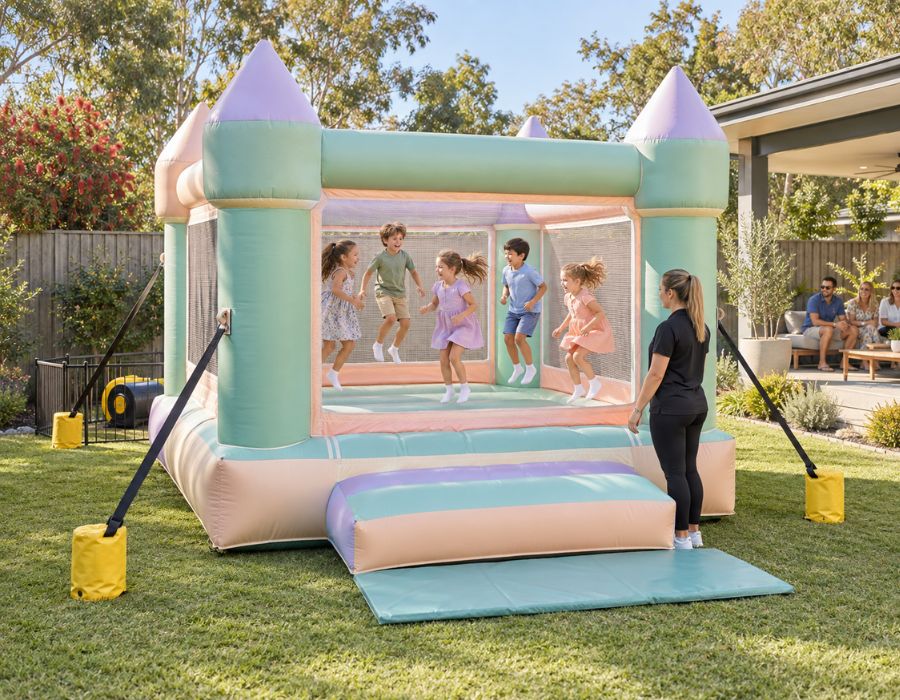
Jumping castle hire is a mature, competitive market in Australia, and most operators own their own equipment and run their own delivery. That means availability is genuinely limited on peak Saturdays, and the castle you want may be booked out weeks ahead.
What separates operators is not the castle. It is anchoring, insurance, supervision policy and what happens when the wind picks up. Those are the things worth comparing, and the things a cheap quote most often leaves out.
Measure before you enquire. The single most common problem is a castle booked for a yard that cannot take it, either because of the footprint, the clearance, the slope or a gate that is ten centimetres too narrow.
Who it suits
Check these four things before you enquire
Measure first. It takes five minutes and prevents the most common problem with this booking.
| Check | What to measure | Why it matters |
|---|---|---|
| Footprint plus clearance | The castle size, then add roughly a metre on every side | Operators will not install with a fence or a wall hard against the wall of the castle |
| Access | The narrowest point on the path from the truck to the yard | Rolled castles are heavy and bulky. A narrow side gate is the usual blocker |
| Surface and slope | Flat grass is ideal. Note any slope or hard surface | Slope affects safety, and hard surfaces need ballast instead of pegs |
| Power | Distance from the nearest outdoor power point | The blower runs the whole time. Most operators carry limited lead length |
What you are booking
What a castle hire normally covers
Anchoring method and supervision are the two line items that vary most, and both matter more than the theme.
Usually included
- Delivery, setup, anchoring and pack down
- A continuous run blower and extension leads
- Ground matting and a safety mat at the entry
- Anchoring by pegs on grass or ballast weights on hard surfaces
- Public liability insurance, with a certificate on request
- Safety rules for supervision, numbers and shoes off
Worth asking about
- Whether a supervising operator stays, and whether that costs extra
- The exact footprint plus the clearance needed on all sides
- The wind speed at which they will not install or will shut down
- The wet weather and cancellation policy, and the deposit position
- Whether they can install on a hard surface, and how it is weighted
- Maximum users at once and the height or age limits for that castle
Before you book
Safety questions worth asking every operator
These are the questions that separate a properly run operation from a cheap one.
- How will you anchor it on my surface, and how many anchor points?
- At what wind speed do you decline to install or shut the castle down?
- Do you hold current public liability insurance, and can I see the certificate?
- Does an operator stay on site to supervise, or is supervision my responsibility?
- What are the maximum users, the height limits and the age limits for this castle?
On the day
Supervision is the part that is actually on you
Unless you have paid for a supervising operator, an adult needs to be watching the castle for the whole hire. Three rules do most of the work.
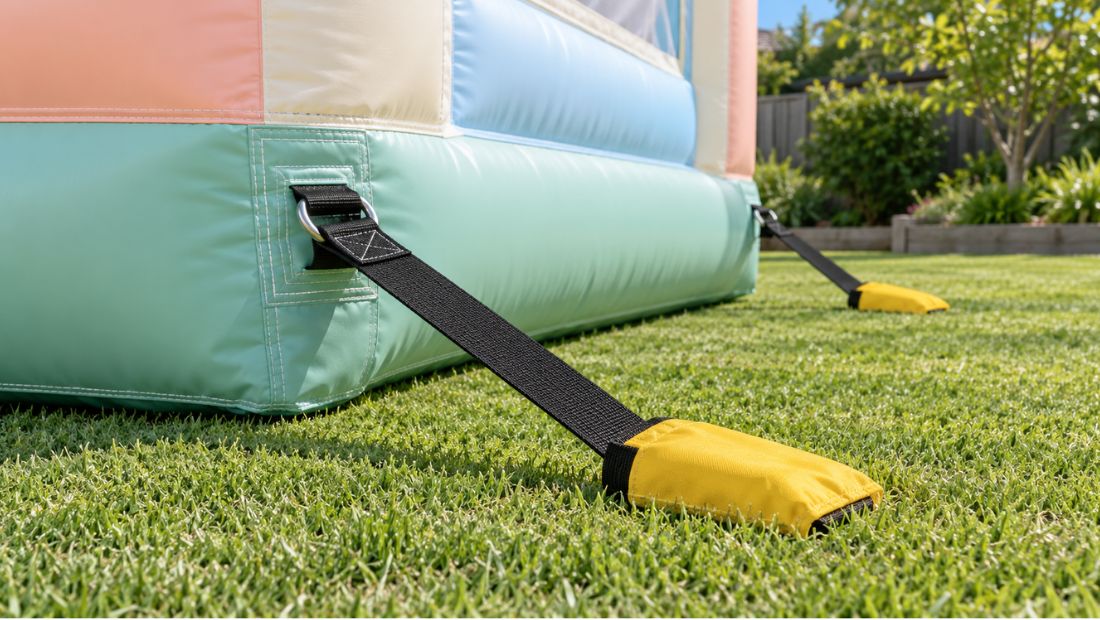
Get quotes
Tell us the yard, not just the date
A sentence about your space, your surface and your access gets you accurate quotes instead of quotes that fall over at delivery.
- Describe the space and the surface it will sit on
- Note the narrowest point of the access path
- Say the age range of the children using it
Questions parents ask
Jumping castle hire questions
How much space does a jumping castle need?
Take the castle footprint and add roughly a metre of clear space on every side, plus headroom clear of branches, eaves and powerlines. A standard backyard castle usually wants around five by five metres of usable space. Always give the operator your measurements rather than a description of the yard.
Can a jumping castle go on concrete or pavers?
Many operators will, using ballast weights instead of ground pegs, sometimes with extra matting underneath. Some decline hard surfaces entirely. Ask before you book, because it changes both the price and whether the booking can go ahead at all.
What happens if it is windy or raining?
Operators generally will not install, and will shut a castle down, in strong or gusting wind. Rain policies vary between operators. Agree in writing before you pay what happens to your booking and your deposit if the weather call goes against you, because this is the most common dispute with castle hire.
Do I need insurance or council approval for a jumping castle?
For a private party at home you generally do not need council approval, but the operator should hold their own public liability insurance and be able to send a certificate of currency. A park, a school or a public event is different. The venue or the council will usually want that certificate plus a risk assessment. See our safety, space and setup guide.
Does someone stay to supervise the castle?
Sometimes, and sometimes at extra cost. If no operator stays, supervision is your responsibility for the whole hire. Ask directly, because assuming supervision is included when it is not is a genuine safety gap rather than a service quibble.
What age is a jumping castle suitable for?
Roughly three and up, and every castle carries its own height, age and user limits set by the operator. Toddler specific castles exist with lower walls and gentler features. For under threes, soft play hire is a better fit.
Get castle quotes that match your yard
Send your suburb, date, surface and access in one brief. Operators who can actually install at your place come back to you.